
Tidey Ocean Foundation: site rebuild
Captured 2026-05-06. Old site: Squarespace template. New site: Next.js 15 on Vercel edge. Both sites measured with the same Playwright setup, identical viewport, three cold runs averaged.
Headline numbers
| Metric | Old | New | Improvement |
|---|---|---|---|
| Total load time | 1.47 s | 498 ms | 2.9x faster |
| Time to First Byte | 103 ms | 34 ms | 3.0x faster |
| First Contentful Paint | 933 ms | 309 ms | 3.0x faster |
| Largest Contentful Paint | 2.58 s | 524 ms | 4.9x faster |
| DOM ready | 1.19 s | 261 ms | 4.6x faster |
| Total page weight | 18.25 MB | 1.75 MB | 10.5x smaller |
Core Web Vitals
The old site fails Google's Core Web Vitals thresholds. The new site passes with significant headroom on every page load.
Largest Contentful Paint
Good is < 2.5 sFirst Contentful Paint
Good is < 1.8 sVisual comparison
Desktop above-the-fold
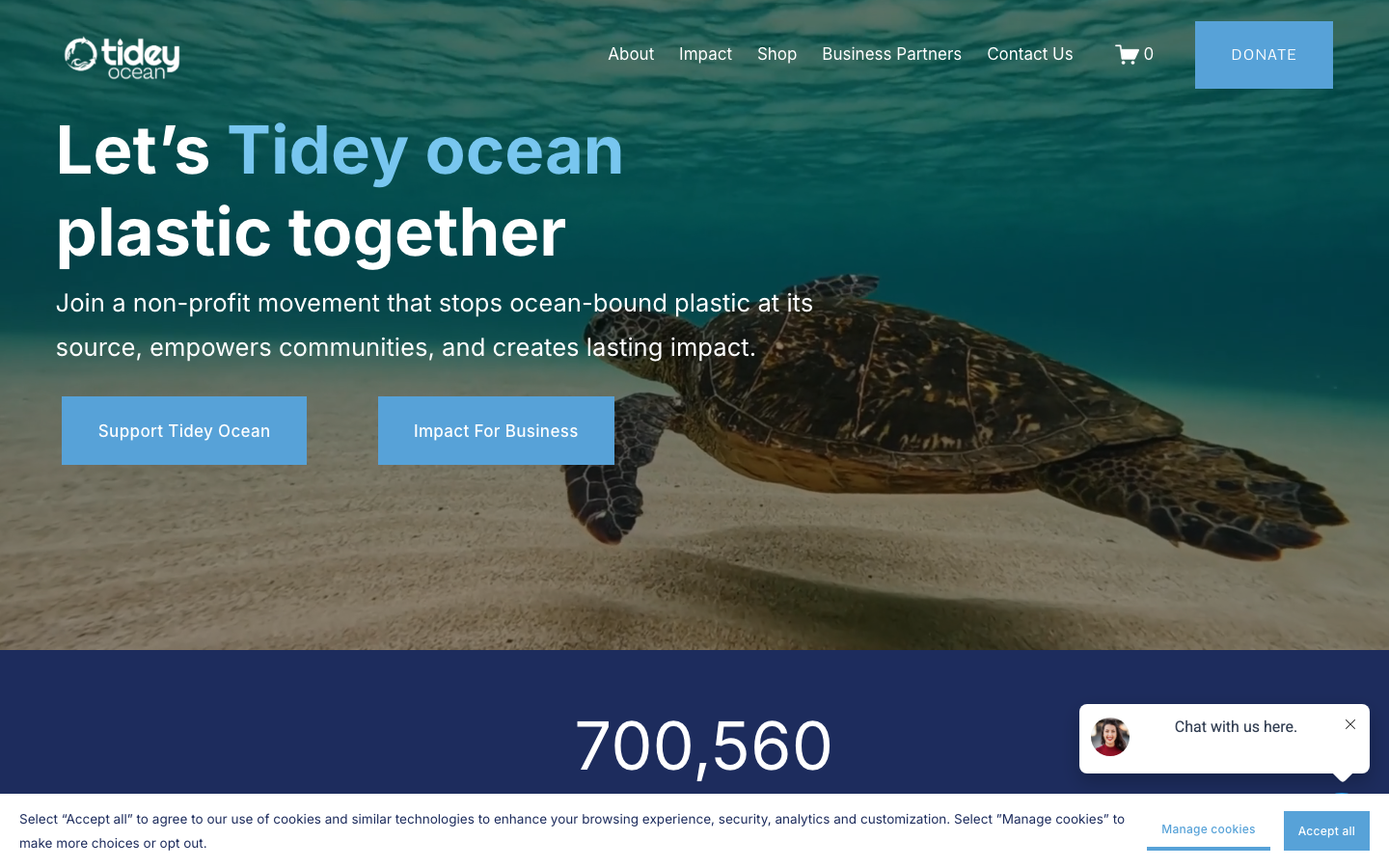
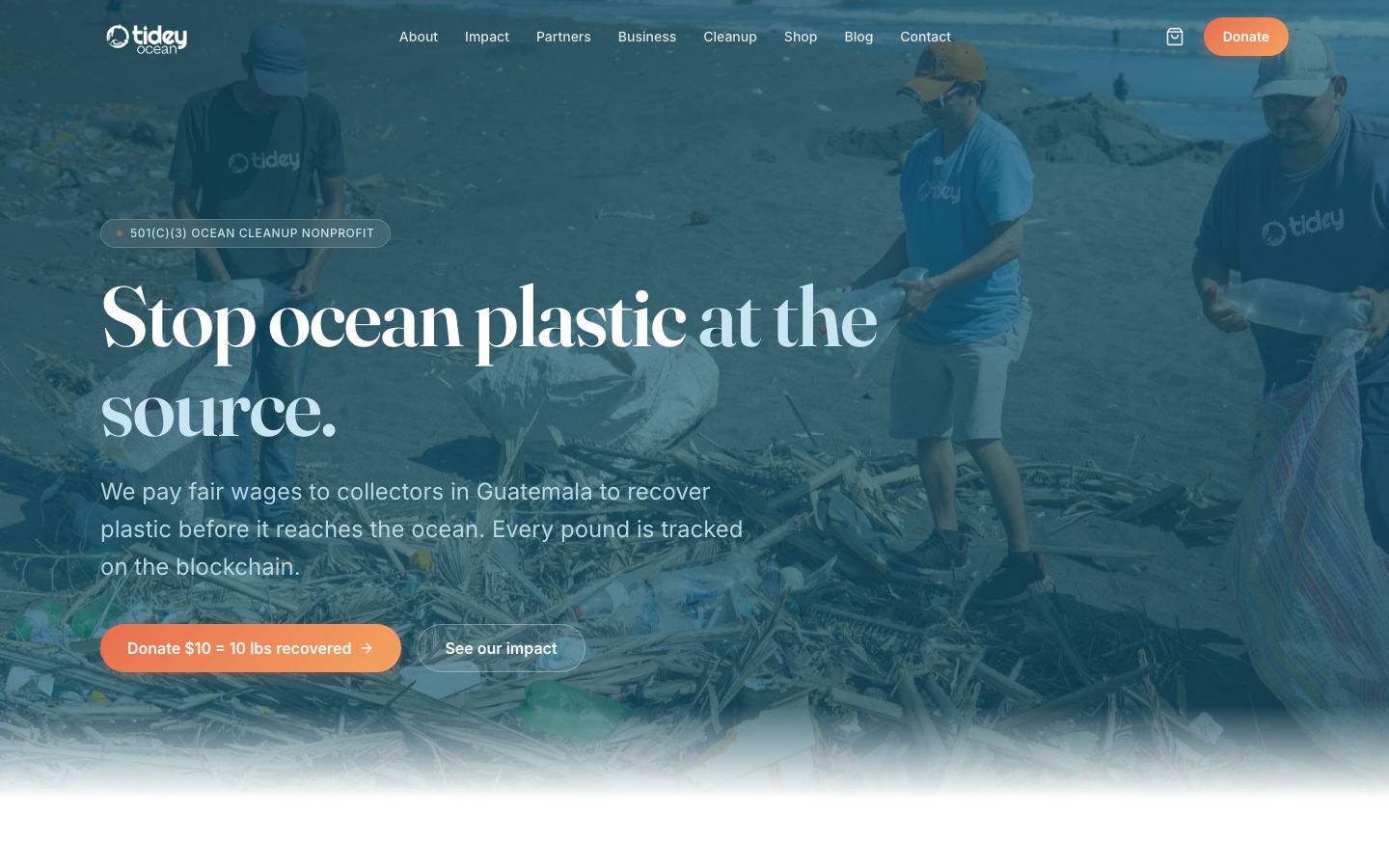
- Old hero uses a generic stock photo of a sea turtle. New hero uses a real photograph of the cleanup crew working on the beach in Guatemala.
- Old headline is a brand-led pun: "Let's Tidey ocean plastic together." New headline leads with the actual mission: "Stop ocean plastic at the source."
- Old CTAs are vague ("Support Tidey Ocean", "Impact For Business"). New CTAs are concrete and quantified: "$10 = 10 lbs recovered" with a clear donation flow.
- Old page is 19 MB with 126 requests, dragged down by Squarespace template assets and a chat widget. New is 1.83 MB with 56 requests, no third-party scripts beyond what is needed.
Mobile above-the-fold
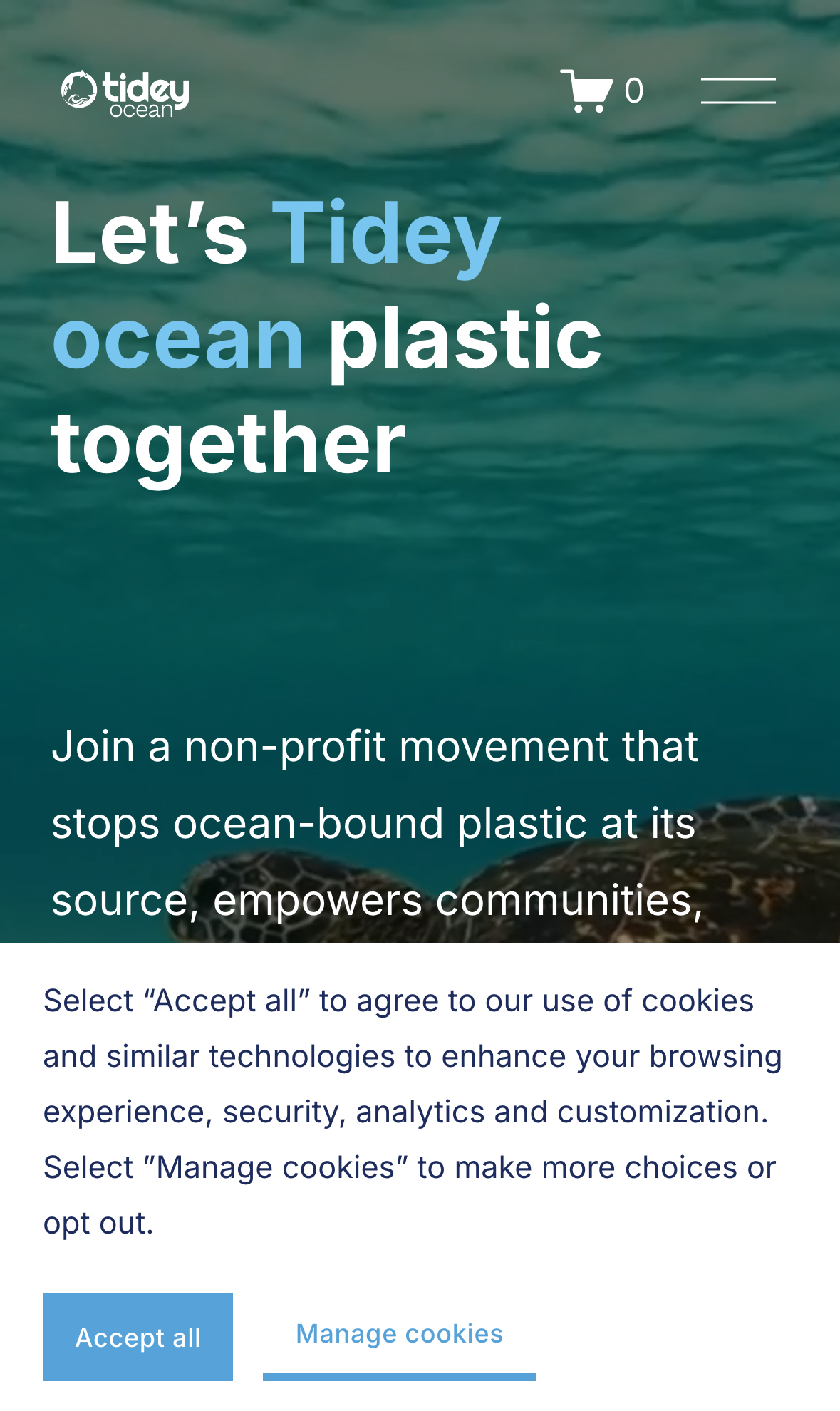
- Old mobile renders the same hero stock photo but with intrusive cookie consent and chat widgets stealing attention.
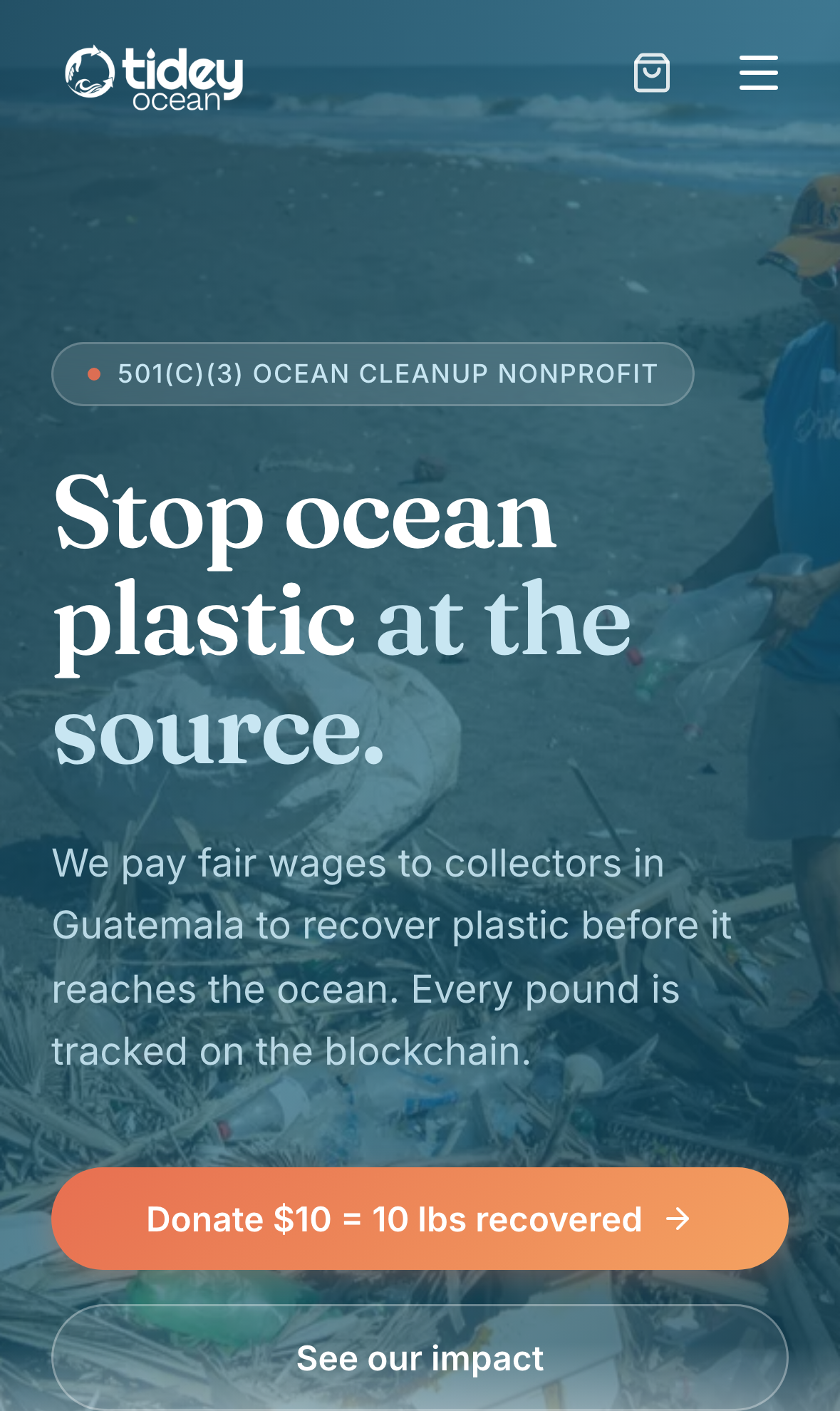
- New mobile keeps the verified-nonprofit badge visible above the fold and the donate CTA pinned in the header.
- Old mobile inherits the full 19 MB page weight, which means slow loads on cellular for prospective donors. New mobile loads in well under a second on cellular thanks to a 10x lighter payload.
What is on the new homepage
The new homepage carries: a hero with a real cleanup-crew photo, a verified-ocean-cleanup-nonprofit badge, a quantified donation CTA, an impact section with running totals (pounds recovered, fair-wage jobs created, blockchain-tracked recoveries), partner logos, a recent collections feed, and a clear pathway for both individual donors and businesses. Every claim is grounded in operational data, not stock copy.
Why this delta matters
The performance gap is meaningful for two compounding reasons.
- Google ranks faster pages higher. Page Experience is a confirmed ranking signal. The new site passes Core Web Vitals; the old site fails. This affects every page in the sitemap, not just the homepage.
- Bounce rate compounds with load time. Industry research from Google shows a page that loads in 1 second converts roughly 3 times better than one that loads in 5 seconds. The old homepage was at 1.47 s; the new one is at 498 ms.
Tidey Ocean shows the rebuild value in a different shape from a wildlife-removal site. The old site already had passable speed and a polished template feel. The wins here are page weight, not TTFB: a 10x reduction in bytes shipped to mobile donors on cellular, plus a 4.9x faster Largest Contentful Paint that pushes the site from "barely fails Core Web Vitals" to "passes with significant headroom". The visual story is mission-led: real photographs from the field replace templates, and quantified CTAs replace generic ones.