
Roofing Sites Built for Storm Season: The Hail-Map Landing Page Pattern
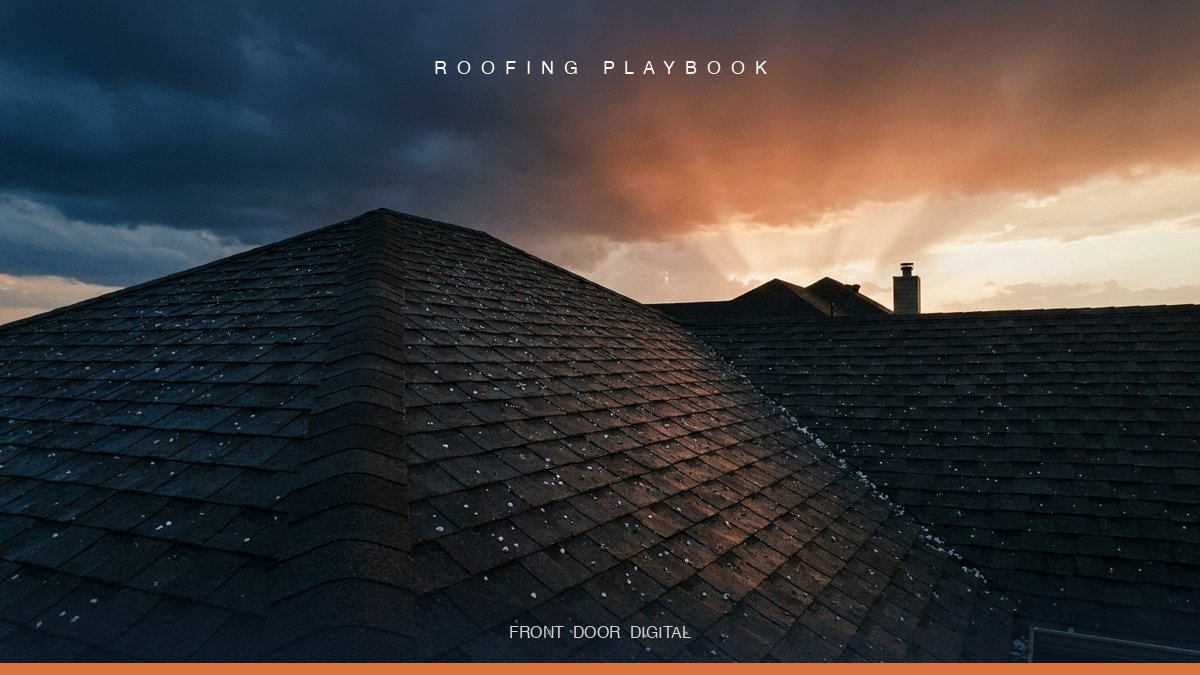
The single biggest annual opportunity for any roofing contractor isn't the steady drip of normal repair calls. It's the 48-hour window after a major hailstorm or windstorm hits your market. In that window, every homeowner in the affected ZIP codes is searching at once, insurance adjusters are gearing up, and the roofing companies that show up in search results capture a serious chunk of the storm-season demand before slower competitors react. The ones who don't, watch it happen on a competitor's truck.
Most roofing websites are built for the average week. A static homepage, a generic services page, a portfolio of past work. That structure does nothing when a storm event creates a tidal wave of intent-driven search for a specific kind of damage in specific neighborhoods. The roofers who win storm season have built their sites for this scenario specifically, with pages that match what homeowners type after damage happens.
Here is the pattern I would build before storm season, not after the first hail report hits. It is the page structure that helps a roofer show up while homeowners are still deciding who to call.
The defining behavior: storm-driven search spikes
Roofing search has a baseline that hums along quietly most of the year, then explodes during weather events. The search pattern usually splits four ways:
- Hail-storm spikes. Within hours of a significant hail event, "hail damage roof repair" and "hail damage [city]" searches can spike hard in affected markets. If you have Search Console or a weather/search data source, cite the local numbers here.
- Wind-storm spikes. Similar pattern after significant wind events. "Wind damage roof," "missing shingles," "roof leak after storm" all surge. Duration is similar but tends to be shorter than hail.
- Seasonal baseline. "Roof replacement cost," "best roofers near me," and other planned-intent searches run year-round with mild seasonal variation.
- Insurance-driven searches. "Insurance roof claim," "free roof inspection," "storm damage roof inspection." These often become higher-intent leads because the homeowner is already thinking about a claim.
The roofing site built only for the baseline misses the spikes entirely. The site built for the spikes wins disproportionately in storm years and still performs adequately in calm years.
The hail-map landing page pattern
The highest-value storm page is a hail-map landing page. The pattern: a dedicated page for each ZIP code or neighborhood that has had recent hail or wind damage, with content that addresses the specific event and the specific area.
Structure of a strong hail-map landing page:
- H1 that names the event and the area. "Hail Damage Roof Repair in [ZIP] After the [Date] Storm" or "Wind Damage Roofing Service for [Neighborhood] Residents."
- A brief description of the storm event itself. Date, severity, hail size if known, affected area. Reference the NOAA storm report or insurance industry data if available.
- What homeowners in that area should be looking for. Specific damage patterns common to that storm: granule loss, soft spots, gutter dents, screen damage.
- The inspection offer. Free, no-obligation inspection within 48 hours. This is the conversion CTA. Pair with the inline form.
- Insurance claim guidance. Brief, helpful, not pushy. "Your homeowners insurance typically covers storm damage. We can document the damage for your claim." This builds trust and aligns with how homeowners actually think about repair.
- Photos from real jobs in that specific area. Not stock images of damaged roofs. Actual work you've done in or near that neighborhood.
- Local references and trust signals. Reviews from customers in that ZIP code or neighborhood. License number. Insurance bonding.
Keep the page useful, fast on mobile, and easy to act on: phone button, short form, and a clear inspection offer. The H1, the URL slug, and the body should all naturally include the specific area and storm event for SEO targeting.
Why this approach beats a generic storm-damage page
Most roofing sites that address storm work have a single "Storm Damage Repair" page that covers everything. That page might rank for the generic "storm damage roof repair" search, but it loses to more specific pages on three fronts:
- Local intent. A homeowner searching after the May 14 hailstorm in Sandy is going to skim past the generic page and tap on "Hail Damage Roof Repair in Sandy After the May 14 Storm" the moment they see it. The relevance gap is enormous.
- Conversion. The specific page can speak to the specific event with specific advice. "After this storm, we're seeing significant granule loss on east-facing slopes. We can document this for your insurance claim." That's a different conversation than generic storm-damage copy.
- SEO weight. Multiple specific pages on a domain build topical authority for the broader subject. Five strong hail-map pages give Google and homeowners more specific answers than one broad storm-damage page.
How to deploy hail-map pages quickly after a storm
The challenge with this strategy is timing. Storm response is a sprint. The pages need to be live fast, ideally within a day or two, while homeowners are still searching for what just hit their neighborhood. Most websites can't move that fast.
The fix is preparation. Before storm season starts in your market, build the template and the page-generation workflow:
- Build a hail-map landing page template with placeholders for storm date, affected area, ZIP codes, damage type, and local references. Make it editable in a CMS or via a simple Markdown file system.
- Pre-write the boilerplate sections (what to look for, insurance guidance, your inspection process, trust signals). These don't change storm to storm.
- Set up an alert system for storm events in your service area. Tools like Hail Trace, AccuWeather Storm Tracker, or simply NOAA storm reports give you fast notification.
- When a storm hits, generate one focused page for each affected ZIP code or neighborhood you can actually serve. Fill in the storm-specific details, upload local photos as soon as you have them.
- Submit each page to Google Search Console for indexing immediately upon publish. This accelerates how fast they start ranking.
The roofers who do this well capture a disproportionate share of post-storm search volume because their pages are live while competitors are still updating their static "Storm Damage" page.
Want help building your hail-map landing page system before next storm season?
Front Door Digital can build the storm pages, templates, and inspection CTAs before you need them. Get in touch.
The conversion stack for roofing
Beyond storm-specific pages, the rest of the roofing site needs the parts that turn a visit into a call or inspection request. The pieces that matter most for roofing specifically:
- Sticky phone banner at the top, persistent on scroll, on every page.
- Inline lead form above the fold on home and service pages. Name, phone, address, with a free-text field for "what happened" so the homeowner can describe damage in their own words.
- Free inspection offer prominently displayed. This is the conversion lever in roofing. "Free 30-minute roof inspection, no obligation" converts much better than "Get a quote."
- License, insurance, and bonding numbers visible in the footer and on service pages. Roofing is a category where homeowners worry about getting scammed by storm-chaser companies, and the credentials matter.
- Local crew photos. Real trucks, real workers, real local references. Stock images of generic crews read as templated and erode trust in a vertical that's already trust-fragile.
- Insurance claim help language. Roofers who clearly position themselves as advocates for the homeowner during the insurance process win more business than those who just sell roof replacement. Reference the claim process briefly on every relevant page.
Service-area depth for roofers
Roofing service areas tend to be wide, like HVAC. A roofer in greater Salt Lake might serve a wide spread of cities. Each one warrants its own service-area page (separate from the hail-map landing pages, which are event-driven), with the standard local content structure: H1 with service and city, 200 to 400 words of city-specific content, real photos and reviews from jobs in that area, and the parts that turn a visit into a call or inspection request.
For roofers, the city-level pages should be supplemented by neighborhood-level pages in the highest-value areas (older neighborhoods with higher home values and more replacement-ready roofs). The math on this is strong: a single good roof replacement lead can justify the time spent building a useful neighborhood page.
Frequently asked questions
How do I track which hail-map pages are actually working?
Google Search Console plus Google Analytics 4. Search Console tells you impressions and clicks per page, so you can see which storm-specific pages are surfacing in searches and at what rate. Analytics tells you what visitors do after they land: form submission rate, phone clicks, session duration. Most roofers don't have either set up properly. Set them up before next storm season and you'll know precisely which pages are earning revenue.
What if a storm hits and we don't have inventory to handle the leads?
Capacity is the real constraint in storm response, not lead flow. Plan for it. Your hail-map pages should have language acknowledging the high call volume and setting expectations. "Due to recent storm volume, our inspection schedule is two weeks out. We'll respond to your inspection request within 24 hours to confirm timing." That protects the customer relationship better than promising a same-week inspection you cannot deliver.
Is storm chasing ethical, and how do I differentiate from the bad actors?
Be local, licensed, insured, and easy to verify. The bad actors in roofing are the out-of-state crews that show up after every major hailstorm with pop-up offices and disappear after the work is done (often half-finished). You differentiate by being unambiguously local and permanent. Use your business address. Reference your years in the market. Photograph the local crew. Make clear that you're going to be here next year and the year after.
Should I use a "Free Roof Inspection" lead magnet?
Yes, but be specific about what's included. A 30-minute on-site inspection with photos and a written damage report is a real offer. A free inspection that turns into a 90-minute sales pitch erodes trust. The inspection should genuinely help the homeowner, even if they choose not to use you for the repair. The conversion rate from genuinely helpful inspections is higher than from sales-disguised inspections.
Roofing is the one home-services vertical where a single weather event can create more demand than months of normal repair traffic. The site architecture that captures that revenue is mostly built in the calm months between storms. By the time the hail starts falling, your hail-map page template needs to already be in place. The roofers who plan for storm season win it. The ones who improvise lose.
Want to know how your site stacks up?
Get a free, no-pitch score on speed, SEO, and AI search. Takes about 90 seconds.